

What is an apostille, exactly?
An apostille is an official certificate from the UK government's Foreign, Commonwealth & Development Office (the FCDO) that authenticates the signature, seal or stamp of the public official on your document. It confirms who signed or sealed it, not the contents, so it can be recognised in other Hague Convention countries without further FCDO or embassy legalisation.
What one looks like
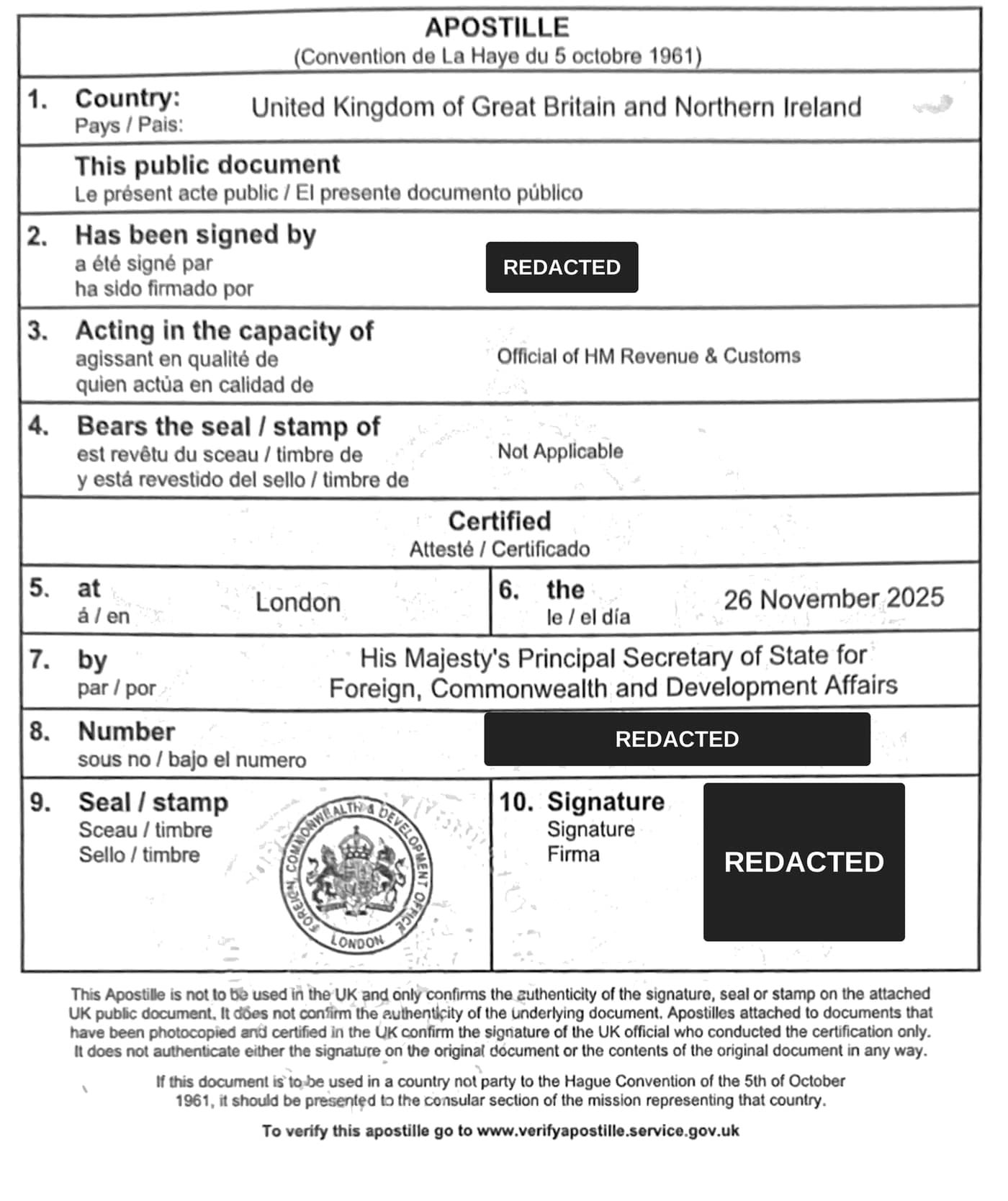
This is what the FCDO adds to your document.
An official FCDO certificate: signed, sealed and given a unique reference number, then fixed to your document. Personal details have been redacted.
- Crown seal & signature of the Foreign, Commonwealth & Development Office
- Unique reference number, verifiable on GOV.UK
- Hague Convention (1961) wording, recognised in 120+ countries
The whole idea, in three steps
 e.g. a birth certificate
Your UK document
An original certificate, degree or company paper issued in the UK.
 official FCDO apostille
The FCDO adds the apostille
The FCDO attaches a signed, numbered certificate authenticating the official signature, seal or stamp on the document.
 ready to use overseas
Ready to send abroad
Recognised in 120+ Hague Convention countries without a further embassy step.
It confirms who signed or sealed the document. It is not proof that the document is genuine, true or accurate, and the certificate says so in its own small print. Whether an apostille is enough for your purpose is decided by the authority receiving the document, so check their requirements or take advice from a lawyer in that country.
Need one on a UK document? We procure FCDO apostilles from our Bristol office, from £99 including the FCDO fee.