

Sponsorship letters for studying or working abroad: notarisation and apostille
6 min read
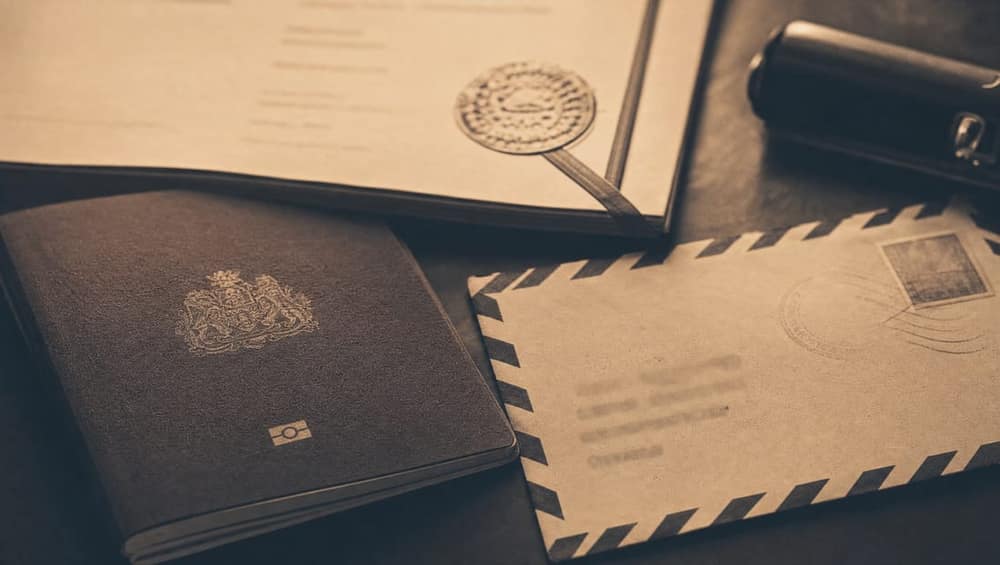
A place at a university abroad, an internship, an exchange year, a first job overseas: somewhere in the visa or permit application there is often a line asking for a sponsorship letter. For a student or a young adult without an income of their own, that usually means a parent or guardian putting in writing that they will pay the bills.
The letter itself is short. What catches people out is the paperwork around it: the authority receiving it may want the signature witnessed by a notary, and then an apostille or embassy legalisation on top, and each of those is a separate step with its own timescale. This guide walks through the whole thing, from what to write to what arrives back in the post.
What a sponsorship letter is
A sponsorship letter is a formal statement, usually from a parent or guardian, confirming that they will support the applicant financially while they are overseas. Visa authorities ask for it because they want assurance that the applicant can meet the cost of living in the host country without recourse to work they are not permitted to do, or to public funds.
It is asked for most often with student visas, but also with work permits for junior roles, internships, cultural-exchange programmes and some family-sponsored stays. The sponsor does not have to be a parent; it can be any person who is genuinely prepared to carry the cost, provided the receiving authority accepts them in that role.
What to put in it
Many embassies and universities publish their own template or list of required points. If the authority you are applying to has one, follow it to the letter; it takes precedence over any general guidance, including this. Where there is no template, a letter is normally expected to set out:
- the sponsor's full name, address and contact details;
- the sponsor's relationship to the applicant;
- the applicant's full name, date of birth and passport number;
- what the sponsor is committing to pay: tuition, accommodation, travel, insurance, living costs, as applicable;
- how long the support will last, as dates or academic terms;
- the sponsor's signature and the date.
Keep it factual and specific. A letter that names the course, the institution and the amounts is more useful to a visa officer than a general promise of support.
The evidence that goes with it
A letter on its own is rarely enough. The authority will usually want to see that the sponsor can actually afford what they have promised: recent bank statements, payslips, a letter from an employer, or evidence of savings. Some authorities ask for a fixed period of statements, or for a minimum balance held for a minimum time, so check the exact requirement before you gather the paperwork.
Those supporting documents can need certifying too. A notary can make certified copies of bank statements and identity documents so that the originals stay with you, and those copies can be apostilled in the same batch as the letter if the receiving authority requires it.
Notarisation: what the notary actually does
In many cases the authority will not accept a letter that has simply been typed and signed at home. It wants the signature witnessed by a notary public, so that it can be sure the person named in the letter is the person who signed it.
That is the whole of what a notary does here. The sponsor attends in person, proves their identity with a passport or other photographic ID and proof of address, and signs the letter in front of the notary. The notary then attaches a notarial certificate confirming who signed and that the signature is genuine. The notary does not vouch for the contents of the letter, and does not confirm that the sponsor has the means they describe; that is what the bank statements are for.
Where a document is eligible, we can also notarise electronically, signing with a qualified electronic signature. That puts the letter on the route to an electronic apostille, which some authorities accept and others do not, so it is worth checking with them before choosing that format.
Apostille or consular legalisation
Once the letter is notarised, the receiving country may want confirmation that the notary is genuine. That is the job of the apostille, issued by the Foreign, Commonwealth & Development Office. It authenticates the signature and seal of the UK notary on the certificate; it does not say anything about the letter's contents.
Which route applies depends on the destination:
- Countries in the Hague Apostille Convention, which includes most of Europe, the United States, Australia, Japan, South Korea and well over a hundred others, accept the apostille as the final step.
- Countries outside the Convention, such as the United Arab Emirates, Qatar, Kuwait, Thailand and Egypt, need the apostille and legalisation by that country's embassy or consulate in London afterwards. Our country checker will tell you which applies, and our guide to apostille versus consular legalisation explains the difference.
Not every authority asks for the apostille. Some universities are content with a notarised letter alone, and some embassies want the full chain. Whether you need notarisation only, or notarisation and an apostille, or the embassy step as well, is set by the authority receiving the letter, so confirm it with them, or take advice from a lawyer in that country, before you start.
Will it need translating?
If the receiving authority works in a language other than English, it may ask for a certified or sworn translation of the letter and its notarial certificate. Where that is the case we can arrange one alongside the notarisation, so the whole bundle goes out together. Again, the authority sets the requirement, including whether the translation must itself be certified in a particular way.
Timing and cost
Plan for the steps in this order, and allow for each:
- Notarisation is done by appointment at our Bristol office, and usually takes a single visit. Bring the signed-but-undated letter, or an unsigned one to sign in front of the notary, your passport and proof of address.
- Apostille through us is from £99 per document, including the FCDO's own fee, with documents ready in 2 to 7 working days depending on the service you choose, plus a working day for despatch and delivery. Applying to the FCDO yourself costs £45 per document and is usually quoted at up to 25 working days.
- Embassy legalisation, where it applies, adds the embassy's own fee and timescale on top, which vary a great deal by country.
Visa deadlines are unforgiving, so it is worth starting as soon as the offer or contract is in hand rather than waiting for the application portal to ask.
How we handle it
We take the letter from signed to ready-to-submit. The sponsor signs in front of our notary in Bristol, we certify any supporting copies that need it, we obtain the apostille through the registered agents we work with, and we arrange embassy legalisation and sworn translation where the destination requires them. The finished documents come back to you by tracked post, or by collection if you are local.
If you are not sure which of those steps your destination actually needs, send us the authority's instructions, or a link to them, and we will tell you what we can do and what you should confirm with them.
Frequently asked questions
Does the student need to come to the appointment? No. It is the sponsor's signature being witnessed, so only the sponsor needs to attend, with their ID and proof of address. The applicant's details go in the letter.
Can the sponsor sign the letter before coming in? It is better not to. The notary needs to see the signature being made, so bring the letter unsigned, or be prepared to sign a fresh copy at the appointment.
Is the notarised letter enough, or do I need an apostille too? That depends on the authority receiving it. Some accept a notarised letter alone; many visa authorities want the apostille as well; a few countries also need embassy legalisation. Check their requirements, or take advice from a lawyer in that country, and we will carry out whichever steps apply.
Does an apostille prove the sponsor can afford it? No. The apostille authenticates the notary's signature and seal, and the notary confirms who signed. Neither says anything about the sponsor's finances, which is why the authority also asks for bank statements or payslips.
Can the bank statements be apostilled? The originals usually cannot, because they are not signed by a UK public official. A notary can certify copies of them, and the notary's certification can then be apostilled, if the receiving authority requires that.
How long should I allow? With a notarisation appointment, the apostille and tracked return, a week to ten working days is a realistic allowance for a Hague Convention destination. Add the embassy's own timescale for countries outside it.
Supporting someone's move abroad?
If you have the university's or embassy's instructions and a draft letter, we can take it from there. Call us on 07982 303 077, email info@pegasusnotaries.com, or visit us by appointment at 11A Kilmersdon Road, Bristol BS13 9NQ.
Sources
Need this handled? We arrange FCDO apostilles, legalisation and certified copies from our Bristol office.
Get a quote